As preparations for the upcoming season approach, Pitt county growers are preparing their fields for a new crop. It’s important to note that when applying poultry litter that a waste report is an important part of knowing what is being applied to your fields.
Zinc Toxicity
Zinc is a micronutrient needed in crop systems to function properly. Usually the zinc content in poultry litter is higher than other fertilizers due to the feed that is used in poultry production. When applying litter to the field, one must recognize the lack of mobility of zinc in soils. Once zinc is in a soil system, its amendment options are limited to Soil Turnover and pH adjustments. Below is a table explaining Zn-I thresholds.
Zinc
300
Caution level for peanut. Peanut could show toxicity at low pH
500
Critical toxicity threshold for peanut. Do not plant peanut.
2000
Caution level for all other crops. Some crops may show toxicity at low pH. Seek alternative sites for zinc containing materials, such as manures.
3000
Cease application of zinc, including animal manures. Maintain soil pH at or above 6.0 for all sites.
Soil Turnover
Soil Turnover is the process of tilling the soil to get a more homogenous soil. This practice is Ideal for no till or minimum tillage systems to distribute the zinc and copper in the soil, avoiding a concentrated band of these nutrients. When turning over soil, go no deeper than the A horizon.
pH Adjustments
Liming soil to a higher pH slows zinc and copper in the soil causing phytotoxic effects to reduce in the plant. It is recommended to lime to 6.5 to 6.8 if experiencing zinc or copper toxicity.
How to avoid Zinc toxicity?
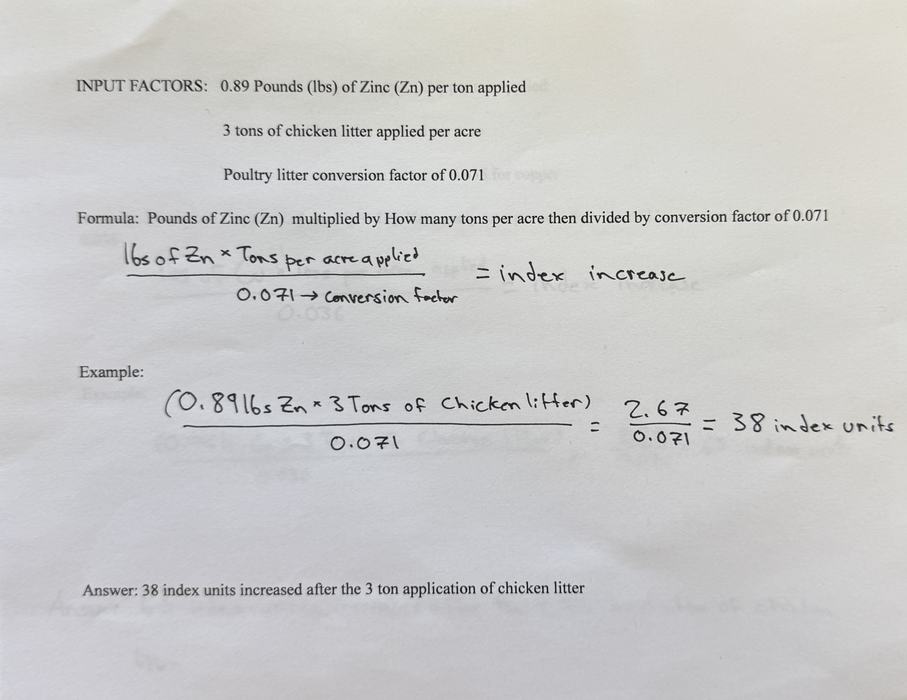
The best way to manage zinc toxicity is to closely monitor the input of zinc from your waste application. Dr. Steph Kulesza and Dr. Luke Gatiboni have a formula to track the index changes based on zinc applied per ton. Below is that formula and an example of how it works.
Zinc, copper, and Manganese Toxicity Management Tool
Pitt county extension has created a tool to help growers track what the waste analysis reports from the NCDA lab translate to on the farm. This tool has boxes in which a grower can take the numbers they receive off of their waste repost and predict what the index increase will be. Access the viewer copy below. Once there, download your own copy and begin inputing values from your waste report.