Pitt Peanuts Today
For Pitt County Peanut Growers
403 Government Circle, Suite 2Greenville, NC 27834
252.902.1704
BEGINNING SPRAY PROGRAMS
The arrival of July means that it’s time for Pitt County peanut growers to develop strategies to control foliar and soil-borne diseases. This issue of “Pitt Peanuts Today for Pitt County Peanut Growers” provides information on starting a peanut spray program.
START AT THE R3 STAGE
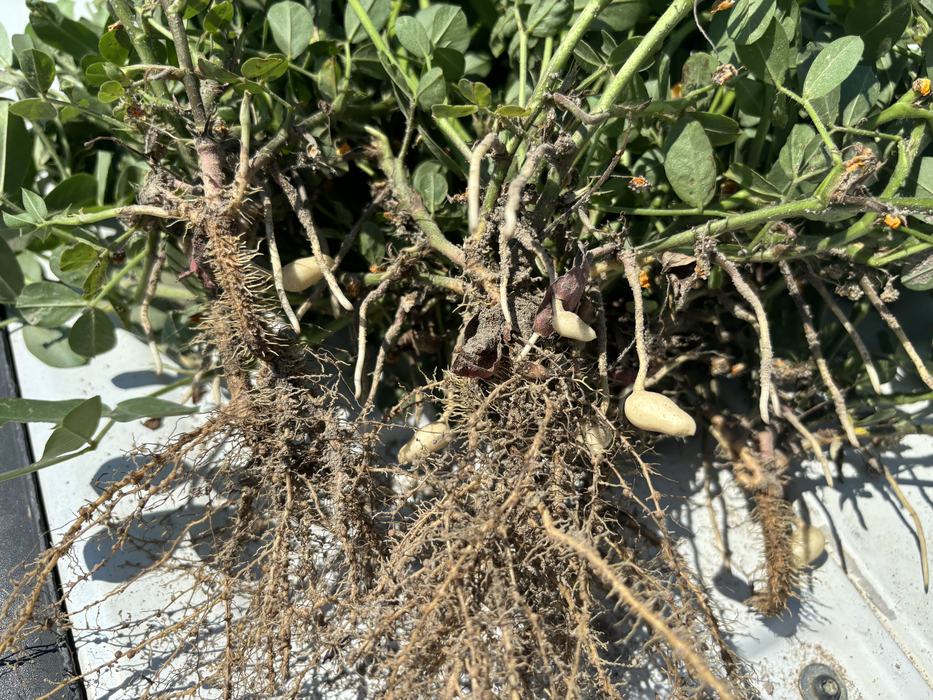
The first fungicide application in peanuts should begin at the very early pod stage known as “R3” and before July 10th. After the first spray, fungicides should be applied according to the leaf spot advisory (non irrigated). Dr. David Jordan describes the R3 stage as “when the peg tip begins to swell and it begins to look like a peanut.”
The first spray is usually chlorothalonil alone (Bravo, Echo, etc.) unless this application is delayed beyond July 10th. Early leaf spot begins at the soil level and moves upward throughout the plant canopy. Make sure a problem hasn’t already started as chlorothalonil is being applied.
THE SECOND SPRAY AND BEYOND
If the first spray is delayed beyond July 10th due to rainfall, there are excellent choices for mixtures with chlorothalonil that include Tilt, Alto, or Prima, etc. Products such as Tilt have curative activity against leaf spot and are also fairly inexpensive. Choices of fungicides for sprays 2, 3, and 4 should be based on the assumption that all fields face the risk of southern stem rot. All fields should receive 1-3 applications of stem rot fungicides that provide protection based on the variety this is planted in a field.
Our recommendation for peanut fungicide spray programs assume that chlorothalonil will be the first and last spray made to peanuts. The final spray of Bravo (or generic chlorothalonil - group M) is critical for preventing fungicide resistance, particularly if a group M fungicide has not been used in previous sprays.
SPRAY ADVISORY UNDERWAY
Based on past research, making spraying decisions based on an advisory can eliminate 1-2 sprays per season. Leaf spot (fungi) is on the spray interval 14 unless adverse weather occurs with excessive rainfall. Always follow spray advisory. The N.C. State Peanut Spray hotline provides the latest recommendations on spraying for leaf spot and Sclerotinia blight. Advisory programs are especially useful during hot, dry weather and have been shown to reduce spidermites in peanuts. Advisories are posted online at NCSUPeanut
Send an email to Dr. LeAnn Lux at lrlux@ncsu.edu to have this daily spray advisory sent directly to your smart phone.
NEW HERBICIDE SELECTION TOOL
The month of July is a good time to “sure-up” weed control for the rest of the season. Check out the new peanut herbicide selection that has been posted on the N.C. State Peanut Portal that points users to the most effective herbicide combinations based on herbicide performance and competitive index. And it does not require counting weeds!
With this new tool, growers will have to refer to production guides and product labels for rates, timing of application, adjuvants, precautions, etc.
Visit the tool here
Jonathan Smith
Agricultural Extension Agent07/01/23
Disclaimer: The use of brand names in this publication does not imply endorsement by the North Carolina Cooperative Extension Service of the products or services named nor discrimination against similar products or services not mentioned.